
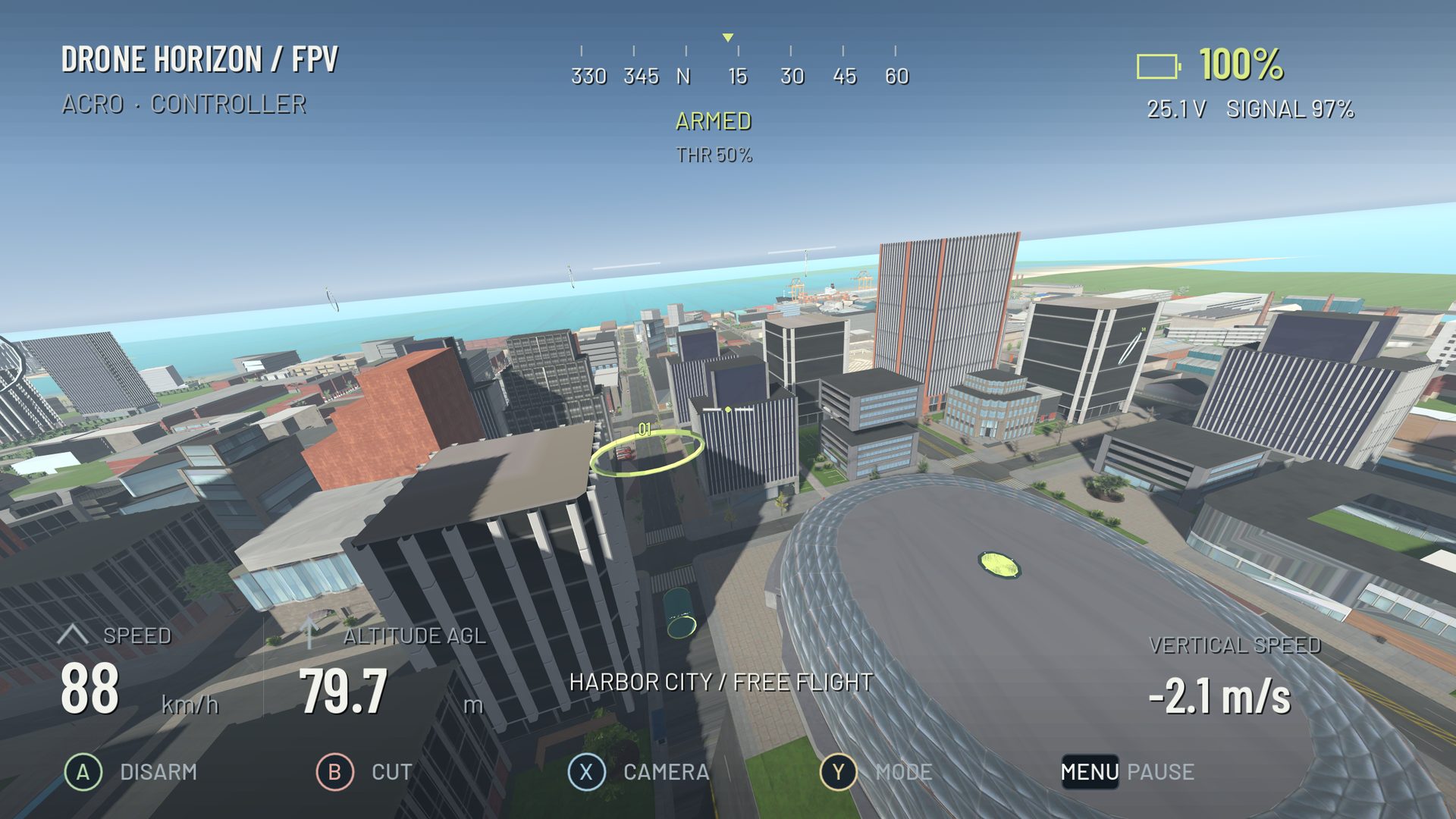
Manual flight from the aircraft's viewpoint
Drone Horizon's FPV camera follows the aircraft's physical camera mount. The manual flight family includes Angle, Horizon and Acro, and the dedicated FPV/Acro style selects rate-based manual flight. These choices change how pilot commands reach the control system; the aircraft continues using the motor-driven physics model.
Angle asks for a constrained pitch/roll attitude and returns toward level when those inputs center. Horizon blends leveling and rate behavior. Acro commands rotation rates, so centered pitch/roll stops requesting rotation without automatically leveling the aircraft. Manual collective remains the pilot's responsibility.
The camera changes what you see
Adjustable camera tilt changes the mount orientation. Field of view changes the visible angular span, with horizontal and vertical entry units available. These settings affect visual judgment rather than directly raising the aircraft's maximum speed.
Use a consistent camera setup while learning a route. A level-looking horizon can coexist with a forward-tilted body, and a wider FOV can make an approaching gate look smaller. The journal's camera guides explain both effects with repeatable comparisons.
Rates are separate from physics tuning
The project implements Legacy Horizon, Actual and Betaflight rate models. A model turns stick position into a requested rotation rate; the flight controller and motor mixer then attempt to produce it within available authority. Matching a rate model is essential before copying numeric settings.
Drone Horizon also contains a separate stabilized camera-drone family. It adds braking and hold behavior. Do not assume a calm hover in that family demonstrates the same manual skill as an Acro hover.
Start with an observable exercise
Use an open offline map. Set a shallow bank, center the roll input, then deliberately remove the bank with an opposite command. Repeat on pitch before linking the two into a broad turn. Keep throttle, view and aircraft selection understandable throughout.
This is a proposed practice exercise, not a button-triggered maneuver system. The FPV learning path connects basic controls to turns, gates and recovery. The simulator remains in development; specific controller and platform acceptance is recorded separately.