Mode 1 and Mode 2 describe where the four primary controls sit on a two-stick transmitter. They do not change the physics of the aircraft. The important difference is which hand controls throttle and pitch.
| Stick movement | Mode 1 | Mode 2 |
|---|---|---|
| Left up/down | Pitch | Throttle |
| Left left/right | Yaw | Yaw |
| Right up/down | Throttle | Pitch |
| Right left/right | Roll | Roll |
ArduPilot's radio calibration guide documents these standard arrangements. Manufacturers and controllers can also allow custom mapping, so always verify the actual setup before flight.
What stays the same
Yaw is horizontal on the left stick in both layouts, and roll is horizontal on the right. Throttle still commands lift in a manual mode; pitch still tilts the aircraft forward or backward. If those terms are new, read the four control axes before choosing a layout.
Neither Mode 1 nor Mode 2 means Angle or Acro. Stick mode is an input arrangement. Flight mode changes how the controller interprets a command and whether it self-levels. You can use either stick layout with either flight mode if the aircraft and transmitter support it.
Which one should you choose?
If you already fly a radio comfortably, keep its layout unless there is a specific reason to change. If you are starting from zero, Mode 2 is a common reference in tutorials and simulator defaults, but the best choice is the one you can use consistently. Changing modes every few sessions makes it harder to build reliable reflexes.
Your controller's physical gimbal behavior matters too. A typical throttle axis does not spring back to center in the same way pitch does. If you remap a physical radio, check that the throttle axis has the expected feel and endpoints before arming. On a gamepad or touch screen, the simulator may implement throttle hold differently; read its control instructions.
Verify before arming
With motors disarmed, move one axis at a time in the setup screen:
- Move the intended throttle stick from minimum to maximum. Confirm the correct channel moves through its full range.
- Move yaw left and right, then pitch and roll. Confirm the direction of each response.
- Release centered axes and check for drift. Calibrate or set deadzone only if needed.
- Return throttle to minimum. Confirm the arm control is separate from the flight axes.
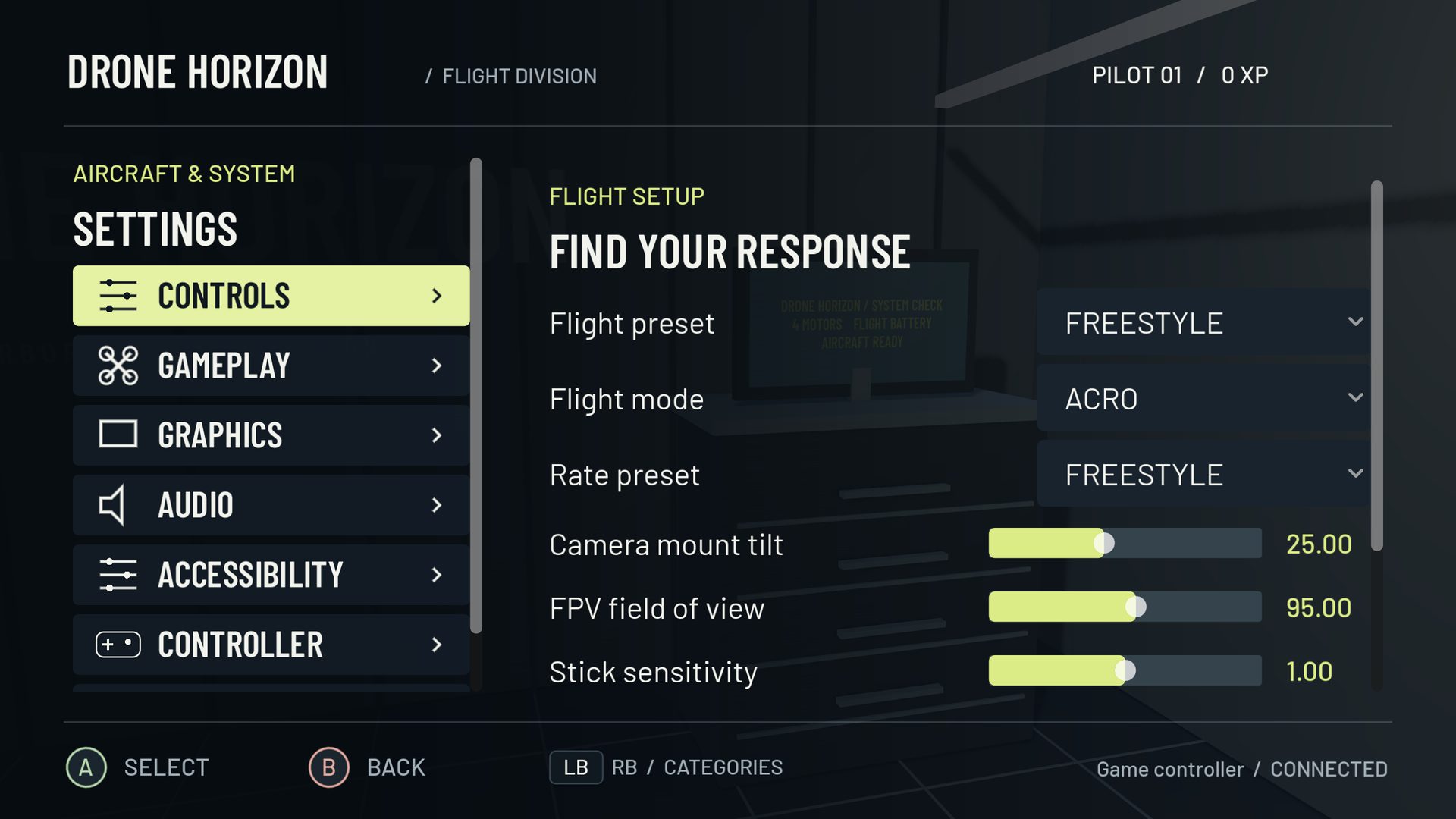
This is especially important with USB radios and controllers whose axis order differs from a default profile. Drone Horizon's controller settings provide mapping and live input checks; its Android touch layout uses Mode 2, with throttle and yaw on the left and pitch and roll on the right. The control learning path gives you exercises after the mapping is correct.
Sources and further reading
- ArduPilot: Radio Control Calibration for stick mode assignments and calibration.
- DJI developer control-style reference for examples of named controller layouts.